Standing Desk Frame Buyer Guide: How to Read Legs, Motors, and Load Specs

The number most people fixate on when shopping for a standing desk frame, the advertised load capacity, is the least useful one on the spec sheet. A frame rated for 330 lbs can still develop a visible side-to-side shake at full standing height, while a quieter 160 kg frame stays dead-flat under the same monitor arm. A load rating only tells you what a frame survives in a one-time vertical push test. It says almost nothing about how the legs behave at 1270 mm with a dual-monitor setup vibrating every time you type. The right way to read a standing desk frame is the way a structural engineer reads a beam: leg geometry first, drive system second, headline numbers last.
This guide walks through the three things that actually separate a frame that lasts a decade from one that wobbles its way to the curb, plus the spec-sheet lines and assembly details most buyers skip. We reference the ergonomic and durability standards furniture engineers use, and we point to where the Hexcal Elevate Standing Desk frame lands in each decision so you can calibrate against a known reference.
Key Takeaways
- Leg construction and column overlap matter more than headline load capacity for real-world stability at full standing height.
- Under ANSI/BIFMA X5.5, the U.S. standard for desk structural strength, durability, and stability, a frame is tested by an independent lab, ask about that conformance before you ask about wattage.
- Dual-motor frames drive each leg independently, which keeps lateral deflection lower at full standing height; single-motor frames share one drive shaft and twist more under off-center loads.
- ISO 9241-5 expects a usable sit-stand range; a frame that bottoms out at 650 mm or tops out at 1200 mm will not fit the 5th-percentile female through 95th-percentile male span.
- Choose a heavy steel dual-motor frame if you run multi-monitor or PC-on-desk loads; a single-motor frame is fine for a laptop-and-one-monitor home setup on a budget.

Stage 1: Read the Legs Before You Read the Load Rating
A standing desk frame is a cantilevered column structure, and the column is where stability lives or dies. The two lifting columns telescope, typically two or three nested steel segments, and the amount of overlap between those segments at full extension determines how much the desk racks (twists) when you lean on it. Three-stage legs reach a taller maximum height but, all else equal, have shorter segment overlap than two-stage legs, which is why a cheap three-stage frame can feel shakier at the top than a stout two-stage one.
Material is the second tell. Genuine structural steel rails and cantilevers resist the harmonic vibration that travels from your keyboard up into the monitor; thin aluminum or stamped steel flexes. The Elevate Standing Desk uses steel rails, cantilevers, and steel legs precisely because the frame is the part you cannot upgrade later. Treat the frame as infrastructure rather than a disposable gadget you swap every two years. A standing desk frame should outlive three generations of the monitors sitting on it.
When you evaluate any frame, ignore the marketing photo and find the column cross-section and stage count. A rectangular or oval column profile resists torsion better than a round one of the same wall thickness, because the flat faces fight the twisting moment that creates wobble.

Stage 2: Single Motor vs Dual Motor, the Real Difference
The single-versus-dual-motor question usually gets flattened to "dual is better," which is true but for the wrong reasons. The headline reason brands give is speed and capacity. The reason that actually matters is force distribution. A single-motor frame drives both legs from one motor through a shared cross-shaft, so lifting force originates at one point and gets transmitted sideways. Put an off-center load, a PC tower on the left and nothing on the right, and that shaft sees torsional stress that shows up as twist at full height.
A dual-motor frame puts an independent motor in each leg. Both columns rise under their own synchronized power, which keeps the motion level and, more importantly, keeps lateral deflection lower at full standing height. Because the lifting force is delivered straight down each column instead of routed sideways through a shared shaft, there is no transfer mechanism to introduce play under an off-center load. The Elevate Standing Desk runs a dual-motor system on a Linak Kick & Click frame, where each lifting column actuates independently; a single-motor failure does not strand the desk mid-cycle, and the load stays balanced.
Here is the honest counterpoint we will not bury: motor count is not a substitute for motor quality. Two cheap motors with weak gear sets will out-wobble one premium motor, and they double the electronics that can fail. If you are choosing between a quality single-motor frame and a corner-cutting dual-motor frame at the same price, the single motor often wins. Dual-motor is the right call when the drive components themselves are solid, not as a checkbox.

Stage 3: Decode the Load Rating Without Getting Fooled
Load capacity is a real number, but it describes horizontal payload on a level desktop in a controlled test, not dynamic stability, not off-center loading, not behavior at full extension. A frame rated to 160 kg, like the Elevate Standing Desk, is specified for level desktop conditions with a safety margin for daily use. That margin is the point. A frame carrying gear well under its rating has structural headroom, while a frame running at or above a low rating has none, even though it still moves.
The line that actually predicts longevity is durability testing, not peak capacity. ANSI/BIFMA X5.5 is the U.S. standard for desk and table structural strength, durability, and stability, and a height-adjustable frame that conforms to it has been run through cyclic and load testing by an independent lab rather than a marketing department. A frame that passes has demonstrated it will not develop progressive wobble as one column wears faster than the other. Ask a vendor for BIFMA conformance before you ask about peak wattage; durability testing tells you whether the frame is built for a decade of use or a year of light duty.

Match the Height Range to Real Bodies
A standing desk frame only earns its name if its travel covers both your seated and standing ergonomic heights. ISO 9241-5, the workstation layout and postural-requirements standard, calls for adjustability that fits users from the 5th-percentile female through the 95th-percentile male, plus intermediate sit-stand and perching postures. In plain terms, the frame must drop low enough for a shorter user to sit with elbows near a neutral angle and rise high enough for a taller user to stand at that same angle.
OSHA's computer-workstation guidance centers on keeping the elbows near a neutral, roughly 90-degree bend whether seated or standing, which is why the low end of a frame's travel matters as much as the high end. A frame whose travel is 620 to 1270 mm, the Elevate Standing Desk range, spans most of that population, while a frame that bottoms out at 700 mm leaves shorter users perched too high when seated. Check the minimum height as carefully as the maximum; most spec sheets brag about how tall a desk goes and quietly skip how low it drops.

The Spec Sheet, Decoded
Once you know what each line means, a spec sheet stops being a wall of numbers and becomes a decision tool. Here is how to translate the specs that matter, with the Elevate Standing Desk as a reference column so you have concrete values to compare against.
| Spec on the sheet | What it actually tells you | Elevate reference |
|---|---|---|
| Motor count | Force distribution and redundancy, not just speed | Dual motor, independent per leg |
| Column stages | Max height traded against segment overlap and rigidity | Verify overlap at full extension |
| Column profile / material | Torsional resistance; rectangular or oval steel beats round | Steel rails, cantilevers, and legs |
| Load rating | Static horizontal payload, not dynamic stability | 160 kg, level desktop, with margin |
| Height range | Whether it fits both seated and standing for real bodies | 620 to 1270 mm |
| Lift speed | Comfort spec; drops proportionally under load | 38 mm/s unloaded |
| Noise level | Long-session livability at full extension | ≤40 dB |
| Control system | A named control box signals documented engineering | Linak CBD6S with anti-collision Desk Sensor |
| Frame hardware | Bolt grades are a proxy for structural seriousness | M5×15mm frame bolts, M6×16mm feet |
The pattern across that table is consistent: every spec is really a question about how the frame behaves under a real load at full height, not a number to brag about in isolation. Read them that way and the marketing headline capacity drops to where it belongs, near the bottom of the list.

The Specs That Hide in the Assembly Manual
Some of the most revealing details about a standing desk frame never reach the product page; they live in the assembly manual. Hardware grade is a proxy for engineering seriousness. The Elevate frame, for example, is bolted with M5×15mm bolts for the frame assembly and M6×16mm bolts at the feet, and its control system is built around the Linak CBD6S control box with an anti-collision Desk Sensor that detects tilt during motion and reverses to prevent damage. A frame that specifies bolt grades and a named control box is a frame whose maker did the structural math.
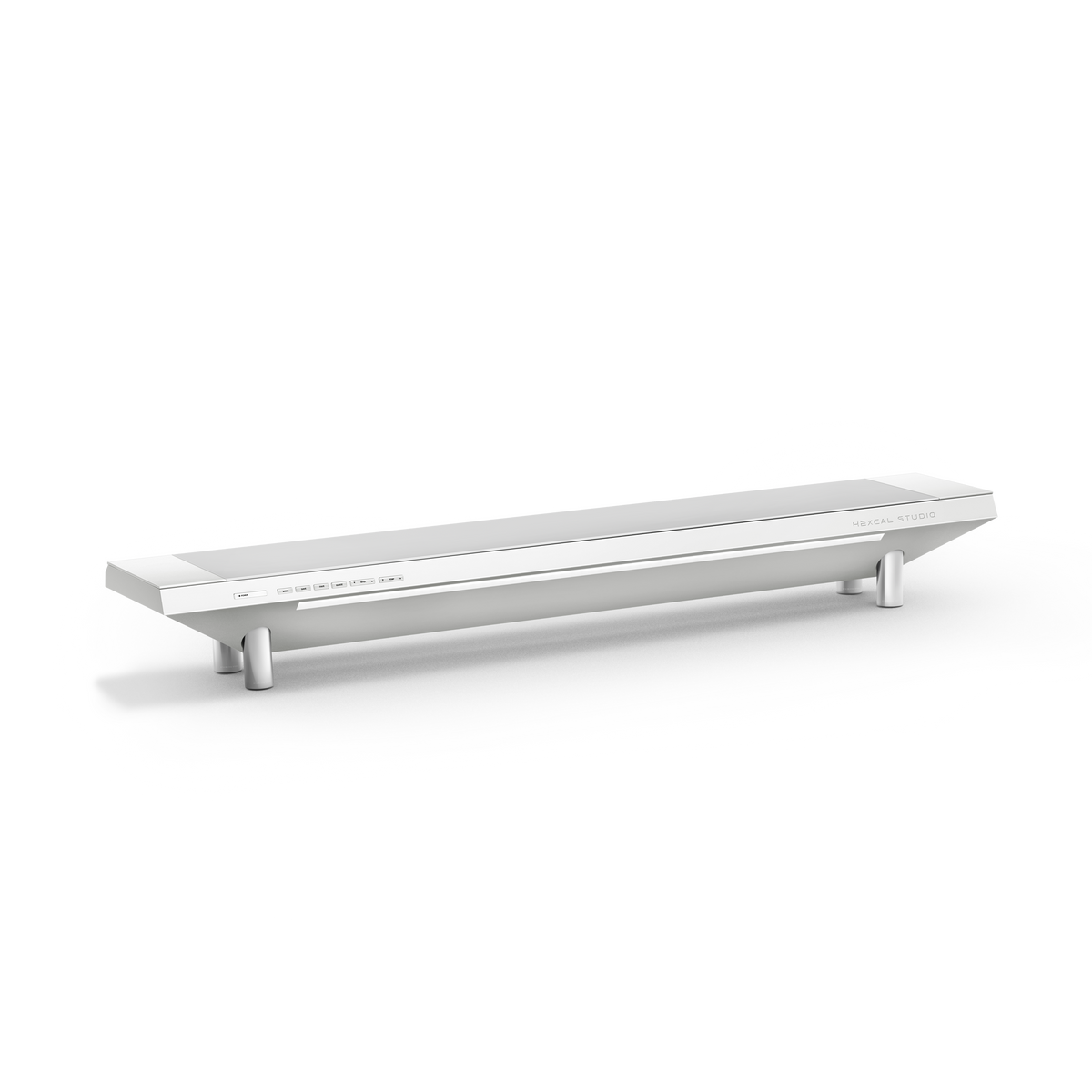
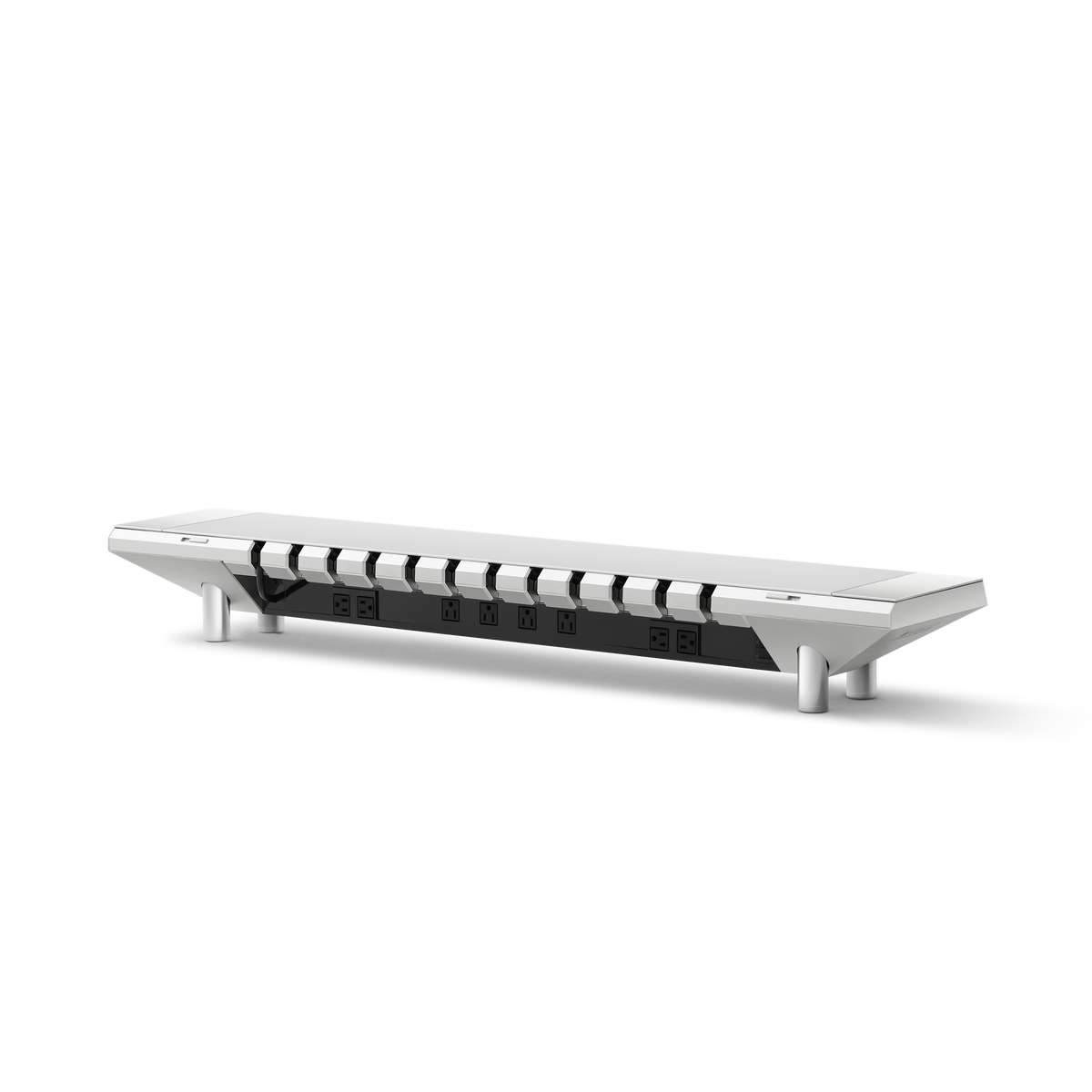
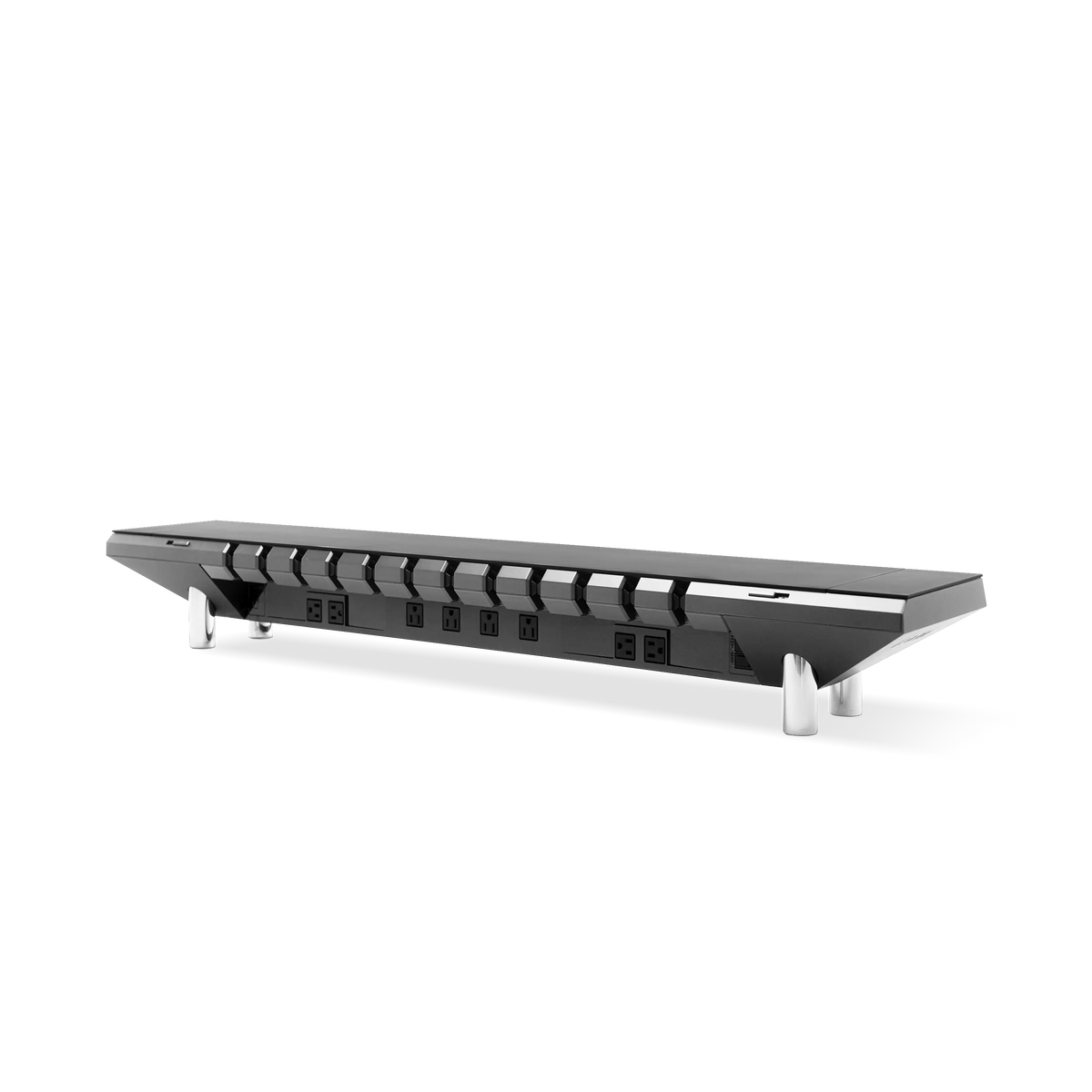
Two more frame-level features pay off over years rather than days. Pre-installed threaded inserts on the desktop underside let the frame mount without drilling, and let you disassemble and remount without stripping the wood when you move. Integrated rail channels that route the motor cables keep the under-desk plane clean; pairing the frame with a managed surface such as the Hexcal Studio removes the cable sag that turns a clean frame into a tangled one, the same way disciplined cable management does for the rest of the desk. Lift speed is the spec people overrate: 38 mm/s unloaded is fine, and remember actual speed drops proportionally under load, so a "fast" frame on paper is slower once it carries your gear.
Quick Reference: Single vs Dual Motor Decision Matrix
| Decision | Single-motor frame | Dual-motor frame (e.g. Elevate) |
|---|---|---|
| Force delivery | One motor, shared shaft | Independent motor per leg |
| Typical load rating | ~100 to 120 kg | ~160 kg and up |
| Deflection at full height | Higher under off-center load | Lower; force delivered straight down each column |
| Best for | Laptop and one monitor, budget home use | Multi-monitor, PC-on-desk, long sessions |
| Limitation | Twists under uneven load | More electronics; quality must be real, not a checkbox |
A frame is a long-term decision, so spend your attention where it compounds. If your setup is a single laptop and one display, a well-made single-motor frame is honest value, and we will not upsell you past it. If you run dual monitors, a desktop PC, or you simply want a workstation that still feels solid in 2036, a heavy steel dual-motor frame like the Elevate Standing Desk is the one worth paying for; pairing it with an ergonomic seat such as the Hexcal Inspire Chair completes the seated half of the ISO 9241-5 posture range. Two disclosures, plainly: Elevate, Studio, and Inspire Chair are Hexcal-designed products, not third-party picks we are pretending to rank objectively; and none of this frame logic applies to a wall-mounted floating desk, which has no telescoping legs to evaluate in the first place. A standing desk frame is not a feature you buy; it is the foundation everything else stands on.
By the Hexcal team.