 Direkt zum Inhalt

Episode 040 - Minimalist Architect's Desk Setup: A Balance of Function and Aesthetic
Episode 040 - Stéphane Bolduc

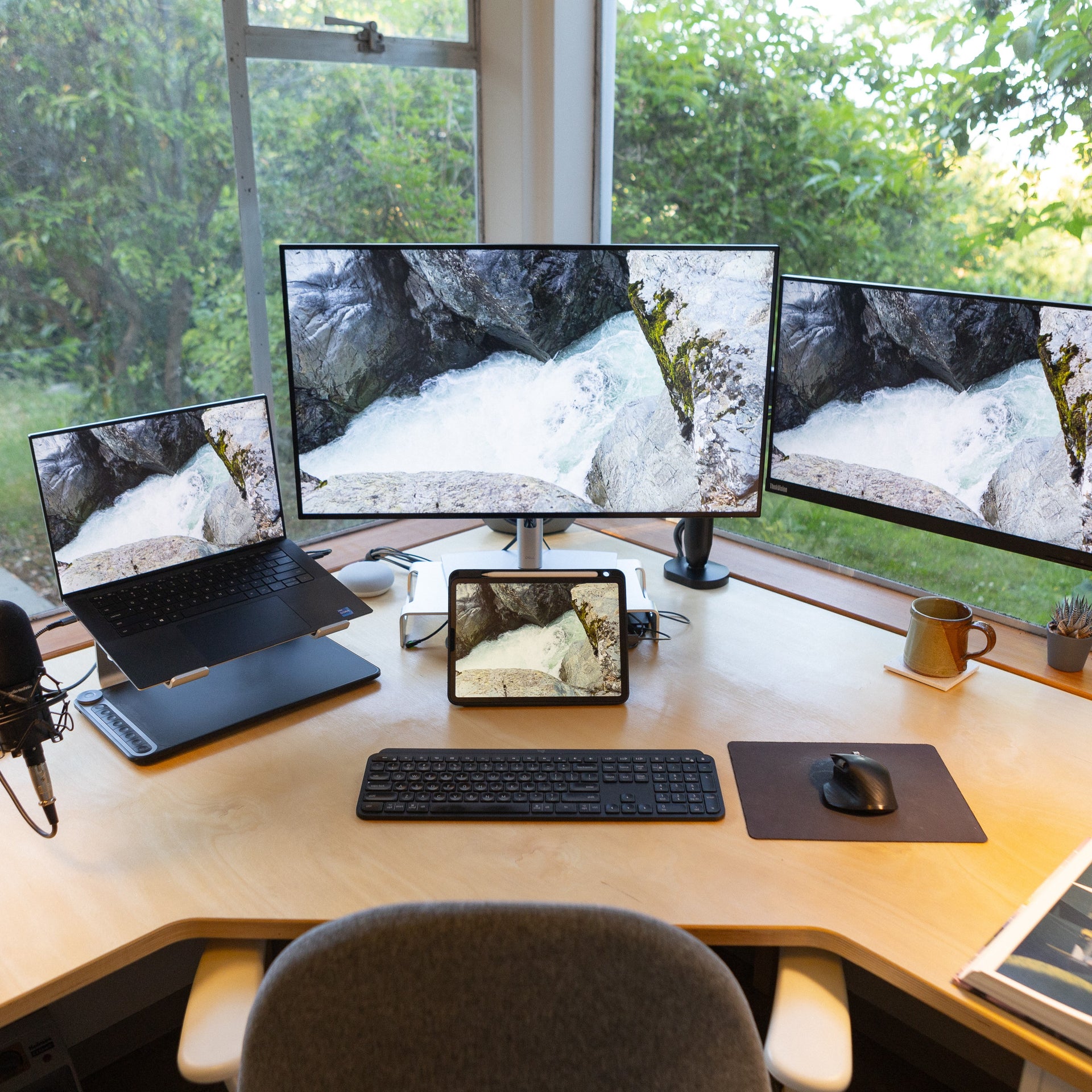
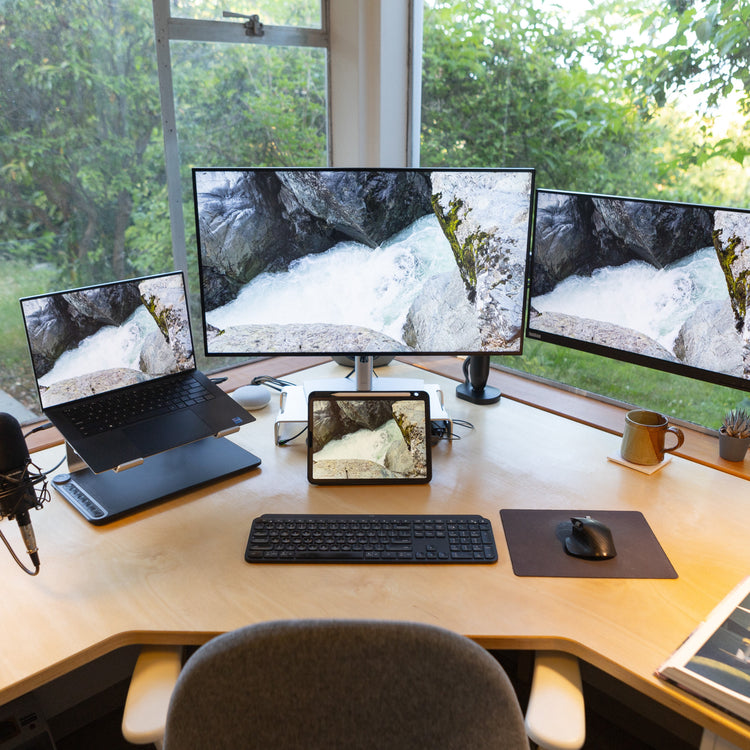
| Produktliste | Artikel |
|---|---|
| Schreibtisch |
Maßgefertigte 1" dicke Platte aus baltischem Birkensperrholz auf Ikea-Komponenten |
| Stuhl | Ikea HATTEFJÄLL (Hellgrau und Weiß) |
| Schreibtischregal | Ikea Metallregal |
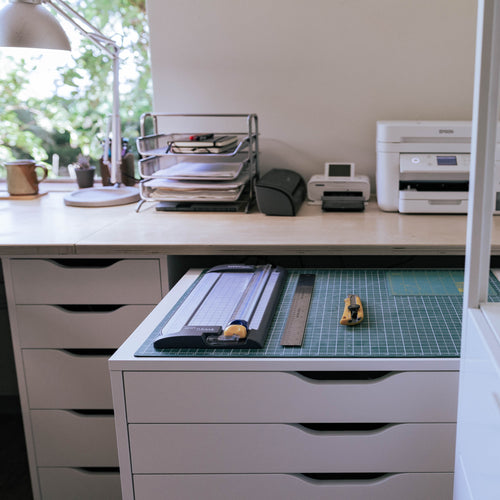
| Lagerung | Schubladen unter dem Schreibtisch + in Regale integriert |
| Laptop | Dell XPS 9510 |
| Tablette | iPad Pro 2018 |
| Dockingstation | Dell 32K USB-C-Monitor (einschließlich Thunderbolt 4-Dockingstation) |
| Externer Speicher | 4 TB NAS (8 TB in RAID 1) |
| Monitor | Dell 32" 4K USB-C Hub-Monitor |
| Monitorhalterung | Serienmäßige Halterung auf einem Aluminiumständer |
| Lautsprecher | JBL-Lautsprecher, angeschlossen über 3,5-mm-Klinkenstecker |
| Tastatur | Logitech MX Keys |
| Maus | Logitech MX Master 3 |
| Schreibtischunterlage/Mauspad | Razer Goliathus Mobile Stealth Edition |
| Webcam | Integrierte Laptop-Webcam oder Canon EOS rp über USB-C |
| Mikrofon | Audio Technica AT2020 |
| Schreibtischlampe | Ikea TERTIAL, in Silber |
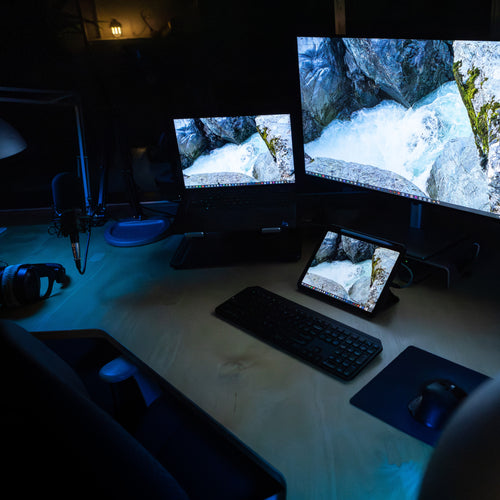
| Umgebungslicht | Schreibtischlampen auf 10 % Helligkeit |
| Smartphone | Google Pixel 6a |
| Kamera | Canon EOS RP |
| Ladegerät | Magnetisches Ladekabel gepaart mit einem schwarzen Schnellladegerät |
| Betrachten | Nixon „Der Wächter“ |
Tell us a bit about yourself.
I’m an architect and artist, with a passion for making things that embody and communicate our connection with nature. Whether that is through a building that uses sustainable materials and technologies, or with art that reflects on humanity’s relationship with the natural world. I am also a general tech and gear enthusiast, always looking for high quality, well designed products.
What’s your favorite item on your desk?
My DT 770 studio headphones. These things produce incredible audio and have such a classic industrial design. I am someone that needs to always be listening to something while working, it helps me think and focus!
What books, blogs, or podcasts recently caught your attention?
I am a huge fan of the podcasts 99% Invisible and Radiolab, one for the focus on everything design and the other for captivating storytelling, often through the lens of science.
Lately I’ve been reading this amazing blog “Construction Physics”, by Structural Engineer, Brian Potter. He releases them weekly, focused on various topics mostly relating to the construction and technology industries. Each post is very well written and researched!
What's your desk setup aesthetics?
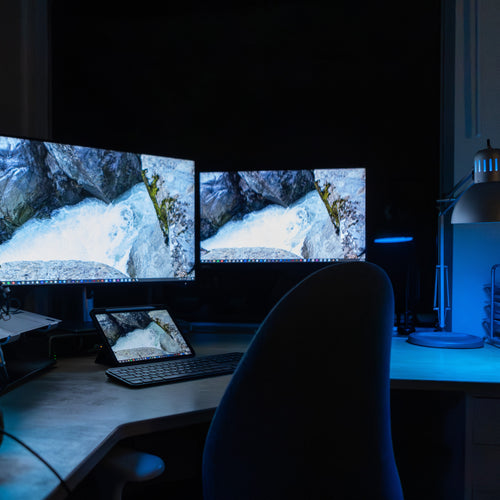
I like a clean, minimal work setup. Everything is organized and is quick to access! I used a pallet of light colours to bounce light in the space, even on overcast days. Lighter colours are also able to transform with lighting easier than darker ones.
When did you start to work on your desk setup?
I designed and built the desk back in 2020. While I have updated most of the tech since then, the desk still serves me well today!
What does your typical day look like?
I work at an architecture and design practice during the week, so that takes up a good portion of my time lately. I’m up pretty early, I’ll start by making some strong coffee along with a small breakfast. I then hop on my bike and head to the office where I work with a group of talented design professionals to create buildings. This typically involves a mixture of work-planning, meetings, designing and creating 3D models that we use to output working drawings.
What niche interest are you up to recently?
While I don’t own a 3D printer (yet), I’ve been interested in the design work and manufacturing that is emerging from makers in this community. If you haven’t seen Scott Yu Jan, I can almost guarantee it will make you an instant fan of 3D printing design and tech!
Your advice for beginners getting into Desk Setup.
I would recommend checking out what other people have done with their workspaces to hone in on what resonates with you. Many people will provide complete lists of the products they are using, there are a lot of great resources out there!
Any tips for other makers who want to improve their workspaces?
Start with a simple list of what you want to achieve with the space. Make notes of what you want to use the space for, and what kind of tech will help you optimize your workflow. If you have access to modeling softwares, I also recommend test-fitting a few options before committing to building something in the real world, but a pencil and grid paper works just fine too!