Heavy Duty Monitor Arm: A Load-First Buying Guide for Ultrawide and Multi-Monitor Setups

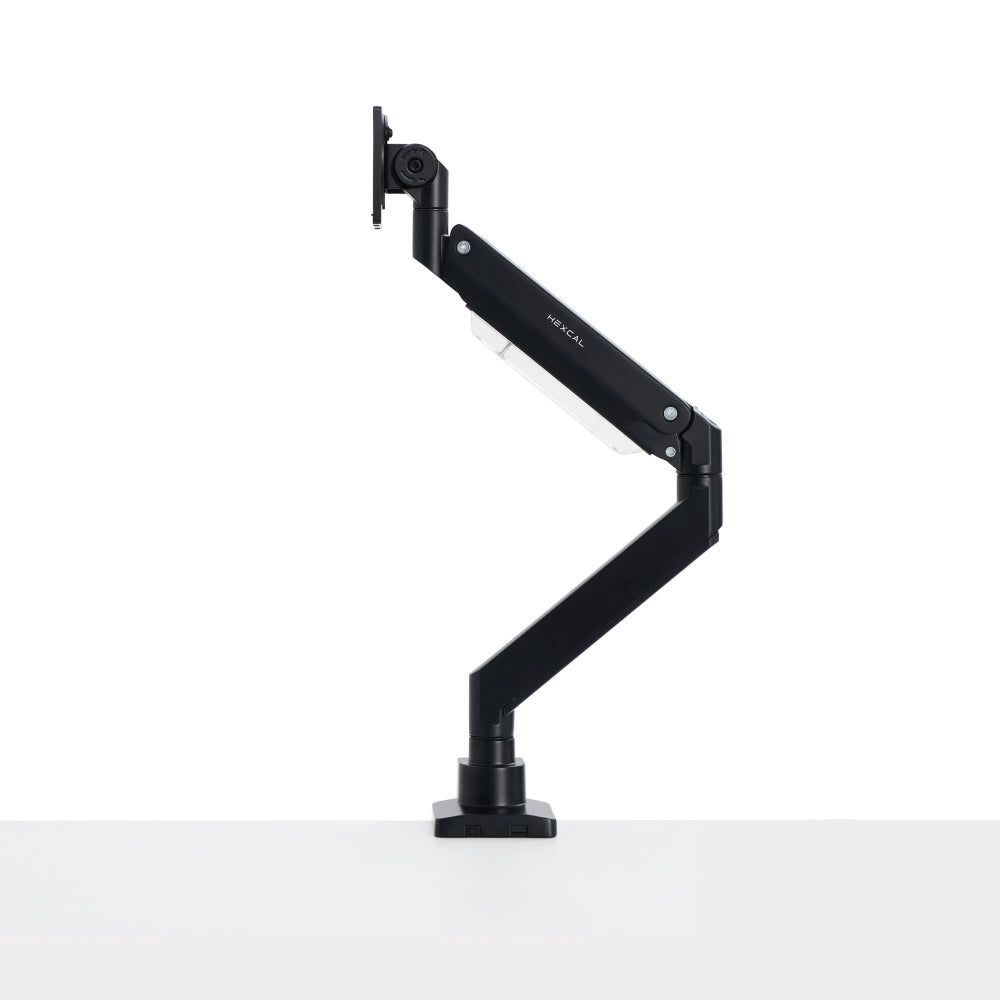
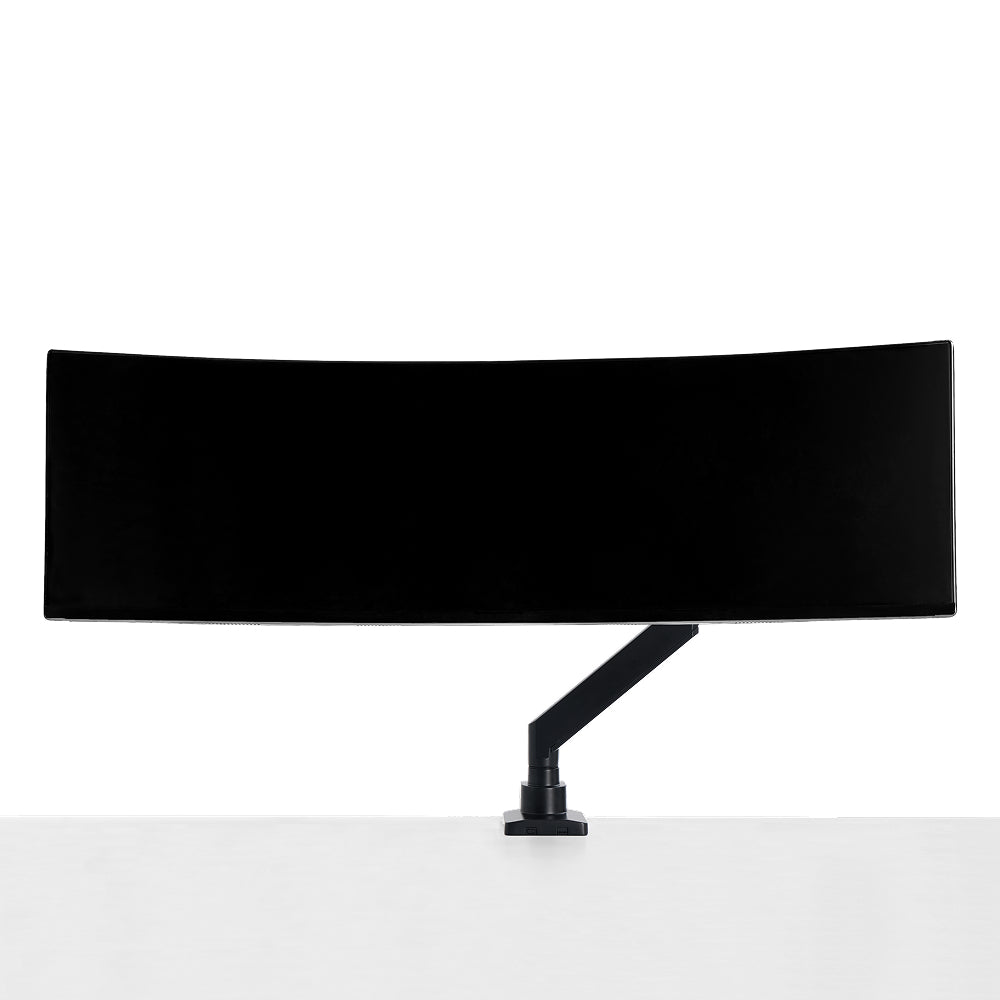
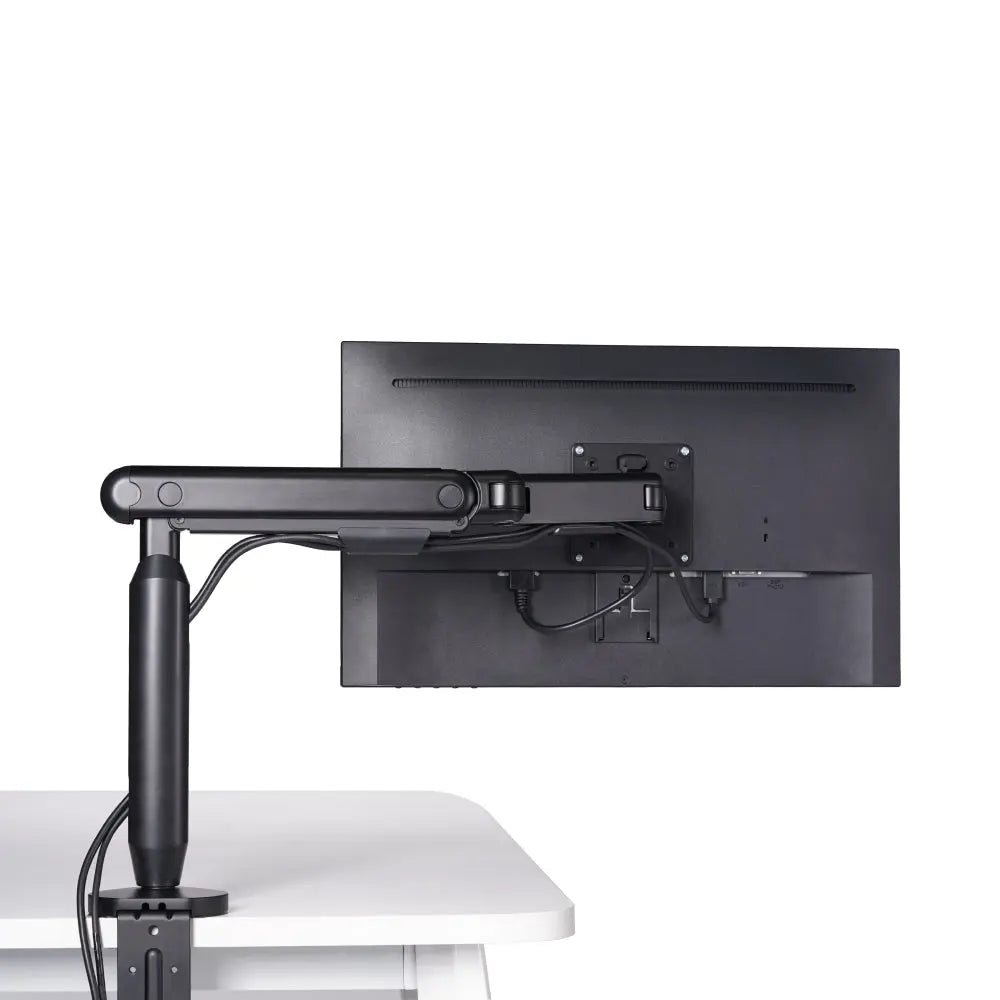
Most guides to picking a heavy duty monitor arm lead with the wrong number. They tell you to find the highest weight rating on the spec sheet and stop there. But a 49-inch ultrawide rarely defeats an arm because the lift mechanism is too weak. It defeats it because the panel's VESA pattern doesn't match the plate, because the desk is too thick for the clamp jaw, or because someone bought one big arm when the job actually needed a multi-monitor system. The failure is almost never raw lift capacity. It is a mismatch between the load you have and the three mounting constraints that decide whether the mount holds it cleanly. This guide treats the Hexcal Heavy Duty Monitor Arm as a worked example of how to read those constraints before you buy.
Key Takeaways
- A heavy duty monitor arm is defined by a load spec, not a marketing word: the Hexcal Heavy Duty Monitor Arm holds 2–27 kg flat or 2–22 kg curved, on screens up to 57″.
- Flat and curved weight limits are different numbers because a curved panel pushes its center of mass further from the mount. Always size against the curved figure if your screen is curved.
- The pattern matters more than people expect: large displays use VESA MIS-F (200×200 mm, M6 screws), not the MIS-D (75/100 mm) found on small monitors.
- Check desk thickness against the mount range, not just the monitor: the Hexcal arm clamps 10–45 mm desktops and grommet-mounts 10–60 mm.
- Choose by job: one big screen → Heavy Duty; standard single screen → Single Monitor Arm; two or more screens → Monitor Mount System.
Why "Heavy Duty" Is a Load Spec, Not a Marketing Word
Every brand calls something heavy duty. The phrase only means anything when it is attached to a measured load envelope. For the Hexcal Heavy Duty Monitor Arm, that envelope is concrete: it supports a flat display from 2 to 27 kg (4.4 to 59.4 lbs), a curved display from 2 to 22 kg (4.4 to 48.4 lbs), and screen sizes up to 57 inches. Compare that to a standard single arm, which typically tops out near 11 kg and 35 inches, and the difference is not cosmetic. It is the difference between an arm that holds a 45-inch bendable ultrawide and one that sags under it within a week.
Read the heavy duty label as a question, not a guarantee: what is the rated range, and where does my screen sit inside it? A panel that lands at the very top of an arm's range will work on paper and disappoint in practice, because you have left no headroom for the gas spring to hold position over years of adjustment. The useful target is a screen that sits comfortably inside the range, not one that maxes it out.

Load Check 1 — Weight Headroom (Flat vs Curved Is Not the Same Number)
The first check is weight, and the trap is that "weight" is two numbers, not one. The Hexcal arm rates 27 kg for flat panels but 22 kg for curved. That gap is physics, not marketing caution. A curved or deeply curved ultrawide carries more of its mass away from the central mounting plate, which increases the torque the arm's joints have to resist at the same total weight. The same kilograms are simply harder to hold.
Work the math against your actual panel. A 45-inch curved ultrawide commonly weighs somewhere between 9 and 11 kg without its stand. Against a 22 kg curved rating, that screen sits at roughly half capacity, which is exactly the headroom you want. The bottleneck, in that case, is not the arm's strength at all. It moves to the next two checks. If your screen weighs more than the rated curved figure, no amount of tightening will keep it level, and that is the moment to stop and reconsider the mount entirely.
Load Check 2 — The VESA Pattern Decides What Fits (MIS-D vs MIS-F)
VESA is the bolt-hole pattern on the back of your display, and it is the single most common reason a "compatible" arm turns out not to be. The VESA Mounting Interface Standard divides into classes by screen size and weight. Small monitors use MIS-D, a 75×75 or 100×100 mm square pattern with M4 screws, typical of displays from 12 to 24 inches. Large displays from 31 inches upward move to MIS-F, a 200×200 mm pattern that uses thicker M6 screws precisely because it has to hold more weight. An arm that only offers a 100×100 plate will physically not reach the holes on a big panel.
This is why a heavy duty monitor arm has to span more patterns than a small one. The Hexcal Heavy Duty Monitor Arm carries a 75×75, 100×100, 200×100, and 200×200 plate, so it covers both the MIS-D range and the MIS-F pattern that large ultrawides actually use. Before you buy any large-display arm, find the VESA pattern printed in your monitor's manual and confirm the mount lists it. A 200×200 panel on a 100×100-only arm is a return waiting to happen.

Load Check 3 — Clamp and Grommet: The Thickness Limit Most People Miss
The third constraint is the one nobody photographs: how the arm attaches to the desk. There are two methods, and each has a thickness window. The Hexcal arm offers a C-clamp that fits desktops 10 to 45 mm thick, and a grommet mount that fits 10 to 60 mm through a drilled or existing hole. If your solid-wood desktop is 50 mm thick, the clamp will not close on it, and you are committed to the grommet route whether you planned for it or not.
Measure your desk edge before you order. This is the same discipline that makes a clean install possible without damaging the surface, a topic worth reading up on in a dedicated guide to mounting a monitor without drilling holes. The clamp path keeps a desk hole-free; the grommet path trades a permanent hole for support on thicker or heavier setups. Neither is better in the abstract. The right one is the one that matches the slab you already own.

When One Arm Is the Wrong Tool: Single vs Heavy Duty vs Mount System
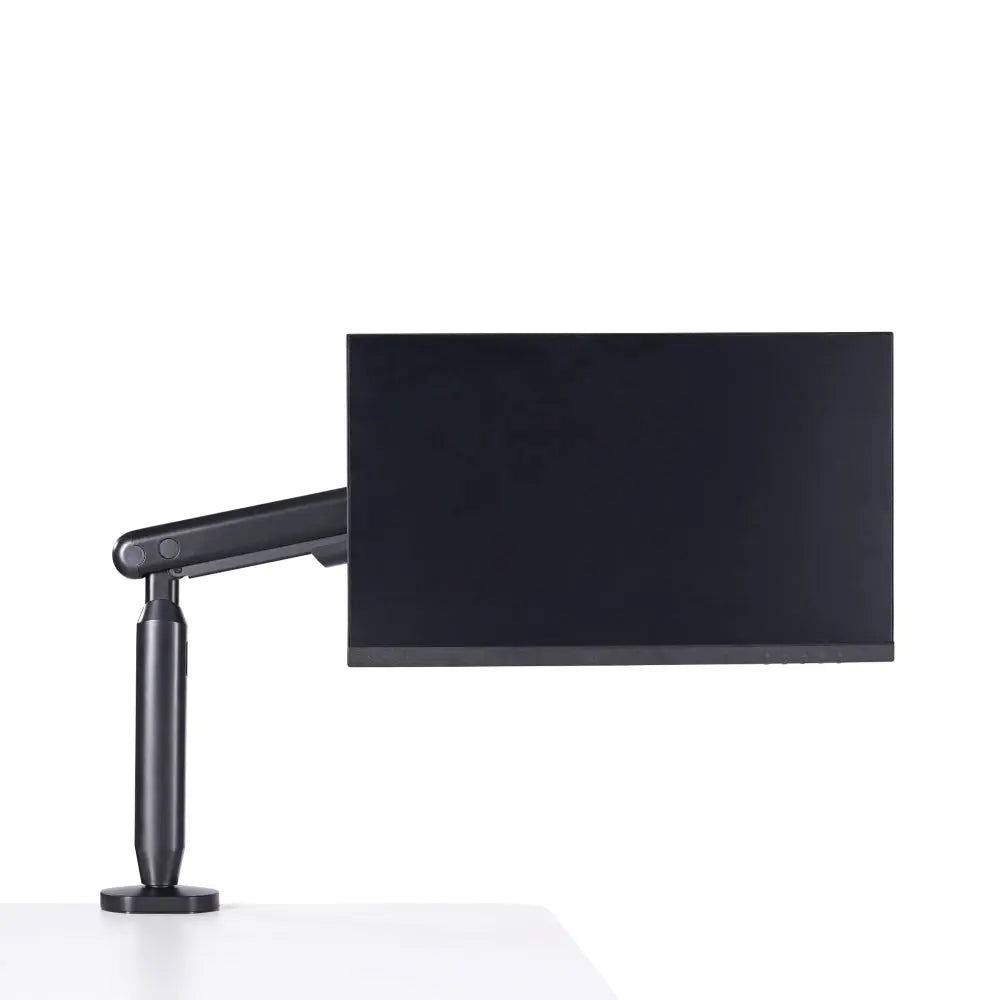
Here is where most "heavy duty" buying advice quietly fails the reader: it assumes the answer is always a bigger single arm. It is not. The conventional push toward the highest-rated arm is wrong whenever the real goal is more than one screen. Three Hexcal products draw a clean line through the decision. The Single Monitor Arm handles a standard single display up to 35 inches and 11 kg. The Heavy Duty Monitor Arm handles one large, heavy, or curved display up to 57 inches and 27 kg flat. And the Monitor Mount System exists for two, three, or four screens, holding 20 kg per arm with a reinforced vertical pole built for stacked or side-by-side configurations.
Trying to run a dual or triple setup off two separate single arms is the classic mistake. You get mismatched heights, no shared cable channel, and a desk edge crowded with independent clamps. For multi-monitor loads, the pole-based system is the correct engineering answer, not a heavier single arm. Match the product to the screen count first, then to the weight.
Tilt, Swivel, and the Two-Person Install Reality
Once the load checks pass, motion range and installation decide how the arm lives on your desk day to day. The Hexcal Heavy Duty Monitor Arm tilts from +60° to -20° and swivels +90° to -90°, which is enough range to angle a large panel away from a window or pivot it toward a second seat. Those numbers come from the live product spec, not an estimate, and they matter most for big screens where small angle changes move a lot of glass.
One honest caveat belongs here: a heavy duty arm holding a 50-plus-inch panel is a two-person installation. Hexcal lists this product as requiring two people to mount, and that is not a formality. Lifting a 10 kg ultrawide onto a VESA plate while aligning M6 screws is awkward and risky solo. Plan for a second pair of hands. One more boundary worth stating plainly: this arm is built to clamp a standard desk edge, and Hexcal does not recommend clamping it onto a Hexcal Studio surface, where balance and edge geometry differ.

A Quick Decision Table
| Need | Single Monitor Arm | Heavy Duty Monitor Arm | Monitor Mount System |
|---|---|---|---|
| Screens | 1 | 1 (large/curved) | 2–4 |
| Max screen size | up to 35″ | up to 57″ | 24–49″ (config-dependent) |
| Weight capacity | 3–11 kg | 2–27 kg flat / 2–22 kg curved | 20 kg per arm |
| VESA | 75/100 | 75/100/200×100/200×200 | 75/100 |
| Best for | Standard single display | One big ultrawide or curved panel | Multi-monitor workstations |
One limitation applies across all three, in the spirit of an honest spec sheet: each ships to North America and the EU only, so confirm your region before ordering.
Final: Match the Mount to the Load, Not the Logo
A monitor arm is not a trend accessory you swap every season. It is the infrastructure that holds a four-figure display steady for years, which means the right buying instinct is the opposite of chasing the biggest headline number. Run the three load checks in order: confirm the weight headroom against the flat-or-curved figure that applies to your screen, confirm the VESA pattern from MIS-D to MIS-F, and confirm the desk thickness against the clamp and grommet windows. If the job is one large display, the Hexcal Heavy Duty Monitor Arm is engineered for exactly that envelope; if it is two or more, look at the Monitor Mount System instead. A heavy duty monitor arm is not the one with the largest number on the box. It is the one whose load envelope, pattern, and mount actually fit the screen and the desk you already have. By the Hexcal team.