Die beste Schreibtischplatte auswählen: Holz-, Holzwerkstoff- und Laminatoberflächen erklärt

Das Holzmaserungsfoto auf einer Produktseite ist die schlechteste Art, eine Schreibtischplatte zu beurteilen, und genau darauf konzentrieren sich die meisten Käufer. Eine wunderschöne Walnussoberfläche, die mit einem VOC-reichen Versiegelungsmittel behandelt wurde, kann mehr Gase in Ihr Heimbüro abgeben als eine ordnungsgemäß zertifizierte technische Platte, und eine „Massivholz“-Schreibtischplatte mit einer freiliegenden Kabeldurchführung kann durch einen einzigen Kaffeefleck ruiniert werden. Die sichtbare Holzart ist weitaus weniger wichtig als der unsichtbare Kern, die Oberfläche und die Emissionszertifizierung beider. Nachdem wir Oberflächen im Labor getestet und an unseren eigenen Arbeitsplätzen verwendet haben, beurteilt unser Team eine Schreibtischplatte anhand von drei Kriterien in dieser Reihenfolge: woraus sie unter dem Furnier besteht, wie sie über Jahre hinweg mit Feuchtigkeit und Belastung umgeht und nach welchem Emissionsstandard sie zertifiziert ist.
Dieser Leitfaden entschlüsselt die tatsächlichen Oberflächenkategorien, Massivholz, technische Platten und Laminate, und sagt Ihnen, welche Holzschreibtischplatte wirklich das Prädikat „Premium“ verdient. Wir werden auch offen darlegen, wo die Oberfläche des Hexcal Elevate Stehpults einzuordnen ist, da wir keine eigenständigen Tischplatten verkaufen und dies auch nicht vorgeben werden.
Wichtige Erkenntnisse
- Das Kernmaterial unter einem Furnier bestimmt die Sicherheit und Stabilität einer Schreibtischplatte stärker als die sichtbare Holzart.
- Achten Sie auf die Zertifizierung nach TSCA Title VI / CARB Phase 2; der US-Grenzwert liegt bei nur 0,05 ppm für Hartholzsperrholz, 0,09 ppm für Spanplatten und 0,11 ppm für MDF, während die europäische E1-Klasse bis zu 0,124 mg/m³ (ca. 0,1 ppm) erlaubt.
- Eine 25 mm dicke Schreibtischplatte ist das praktische Minimum für eine breite Stehfläche, die auch unter Monitorarmbelastung durchbiegungsbeständig ist.
- MDF und Spanplatten sind formstabil, aber an unversiegelten Kanten oder Kabeldurchführungen feuchtigkeitsempfindlich.
- Wählen Sie Massivholz nur, wenn Sie die Oberfläche pflegen; wählen Sie eine zertifizierte technische Oberfläche, wenn Sie absolute Verzugsfreiheit und Gewindeeinsätze wünschen.

Die drei Regeln, nach denen wir eine Schreibtischplatte beurteilen
Bevor wir Materialien nennen, gibt es drei Regeln, die das Marketing durchschneiden. Regel 1: Beurteilen Sie den Kern, nicht die Abdeckung. Ein Holzfurnier ist eine dünne Scheibe Echtholz, die auf ein Substrat, meist MDF oder Spanplatte, geklebt wird, und das Furnier ist inert, während der Kern die potenzielle Emissionsquelle ist. Regel 2: Beurteilen Sie die Oberfläche, denn bei einer Massivholzschreibtischplatte ist das Holz selbst kein wesentlicher Emittent; das Versiegelungsmittel ist es. Eine VOC-arme oder VOC-freie wasserbasierte Oberfläche ist der Unterschied zwischen einer gesunden Oberfläche und einer täglichen Emissionsquelle. Regel 3: Beurteilen Sie die Zertifizierung, nicht das Adjektiv. „Umweltfreundlich“ bedeutet nichts ohne einen dahinterstehenden Standard, der Gegenstand des nächsten Abschnitts ist. Diese drei Regeln gelten für jede Schreibtischplatte, unabhängig vom Preis, und sie sind der Grund, warum unser Team eine Oberfläche als langfristige Infrastruktur und nicht als Einweg-Trendkauf behandelt.

Massivholz: Premium, aber unter Bedingungen
Eine Massivholz-Schreibtischplatte besteht durchgehend aus Echtholz, ohne Unterlage, ohne Furnier, weshalb sie einen echten Charakter besitzt und über Jahrzehnte geschliffen und neu lackiert werden kann. In Bezug auf Emissionen ist Massivholz dem Goldstandard nahe, da das Holz keine signifikante Formaldehydquelle darstellt. Der Premium-Anspruch ist real, ebenso wie die daran geknüpften Bedingungen.
Der Haken ist Bewegung und Pflege. Naturholz dehnt sich bei Feuchtigkeit aus und zieht sich zusammen, sodass eine Massivholz-Schreibtischplatte sich wölben oder Risse bekommen kann, wenn sie nicht auf beiden Seiten lackiert und in einer stabilen Umgebung aufbewahrt wird. Die Oberfläche ist auch die gesamte Emissionsgeschichte: Eine Öl- oder wasserbasierte, VOC-arme Oberfläche hält sie sauber, während ein billiger, VOC-reicher Lack den natürlichen Vorteil des Materials zunichtemacht. Eine Schreibtischplatte im Metzgerblock-Stil ist die beliebteste Premium-Option, erfordert aber regelmäßiges Nachölen. Wählen Sie Massivholz nur, wenn Sie die Oberfläche tatsächlich pflegen werden; andernfalls bezahlen Sie für Schönheit, die Sie verfallen lassen.
Technische Platten: MDF und Spanplatten richtig gemacht
Technisches Holz, MDF und Spanplatten, ist das gängigste moderne Schreibtischplattenmaterial und wird zu Unrecht verunglimpft. MDF ist isotrop: Ohne Maserung und Äste hat es in jeder Richtung die gleiche Festigkeit, verzieht sich nicht wie Naturholz und verbindet Laminate sauber. Eine hochwertige technische Platte, die nach TSCA Title VI oder CARB Phase 2 zertifiziert ist, verwendet emissionsarme Harze und ist für die meisten Benutzer eine formstabilere Schreibtischplatte als Massivholz. Der Elevate Standing Desk verwendet einen Spanplattenkern mit vorinstallierten Gewindeeinsätzen auf der Unterseite. Zur Klarstellung: Elevate ist ein Produkt von Hexcal, das wir entwerfen und bauen, und wir verkaufen es als kompletten Schreibtisch, nicht als bloße Tischplatte. Diese Einsätze ermöglichen die Montage des Stahlrahmens ohne Bohren und ermöglichen das Zerlegen und Wiederzusammenbauen ohne das Holz zu beschädigen, was eine Rahmen-Oberflächen-Integration ist, die eine eigenständige Holzschreibtischplatte nicht bieten kann.
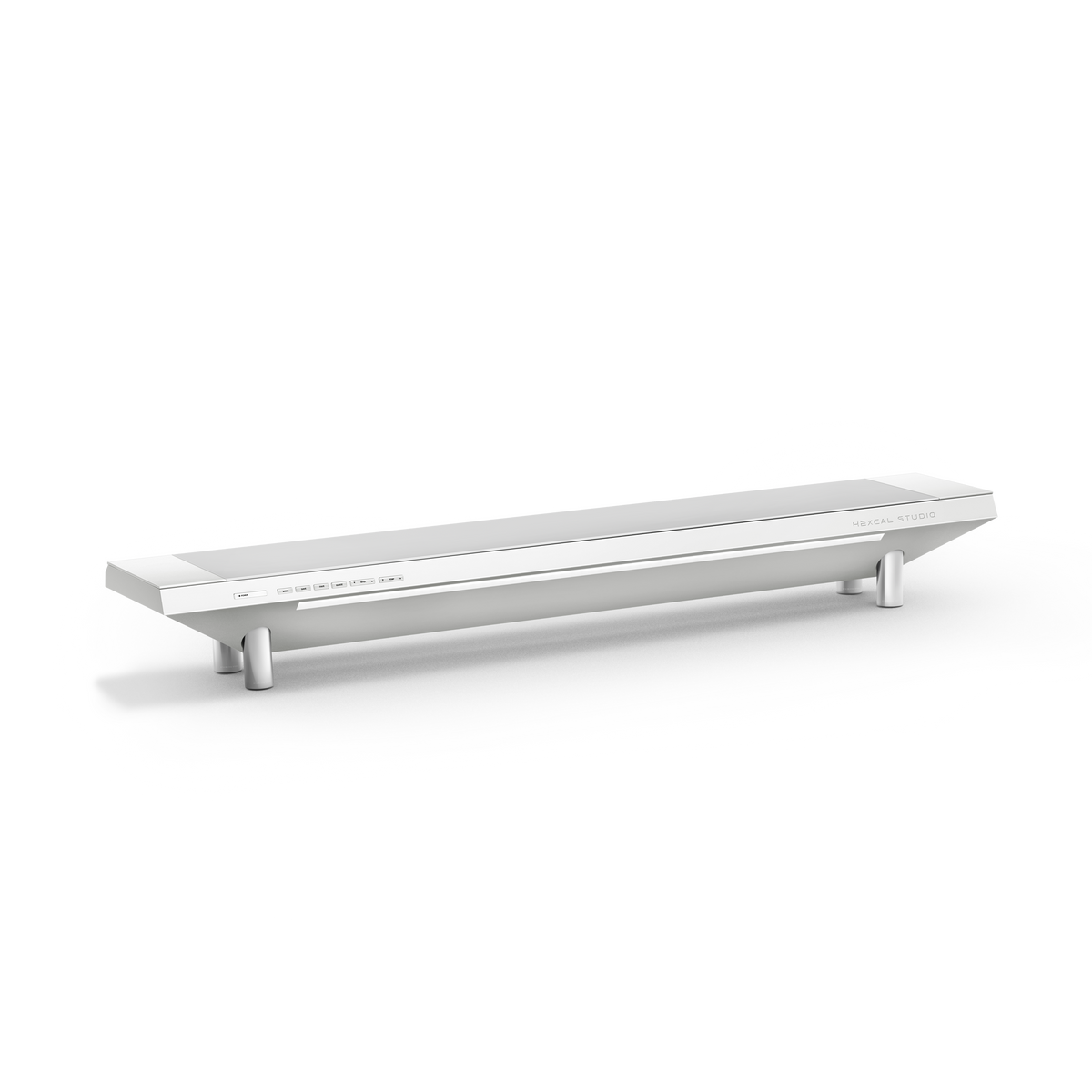
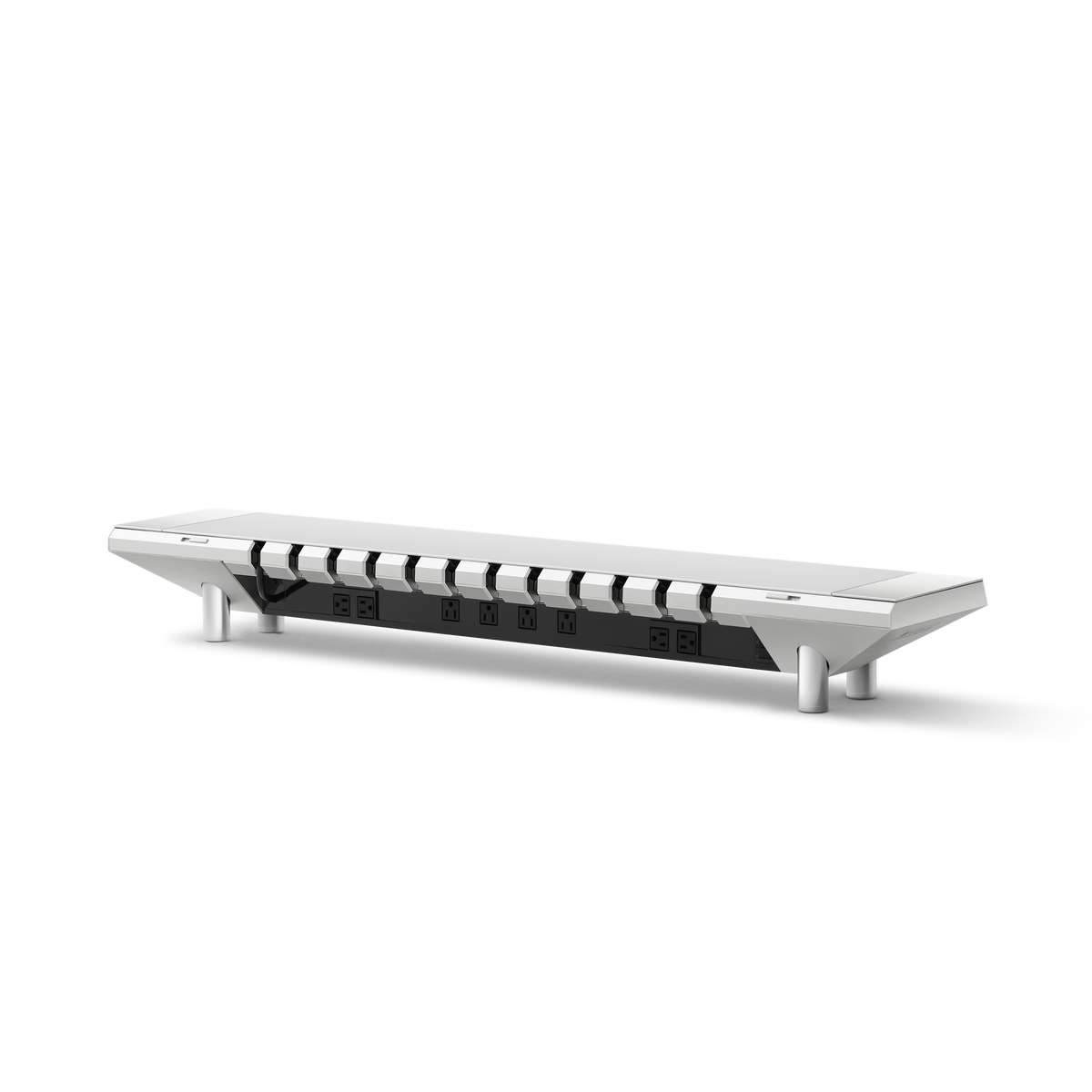
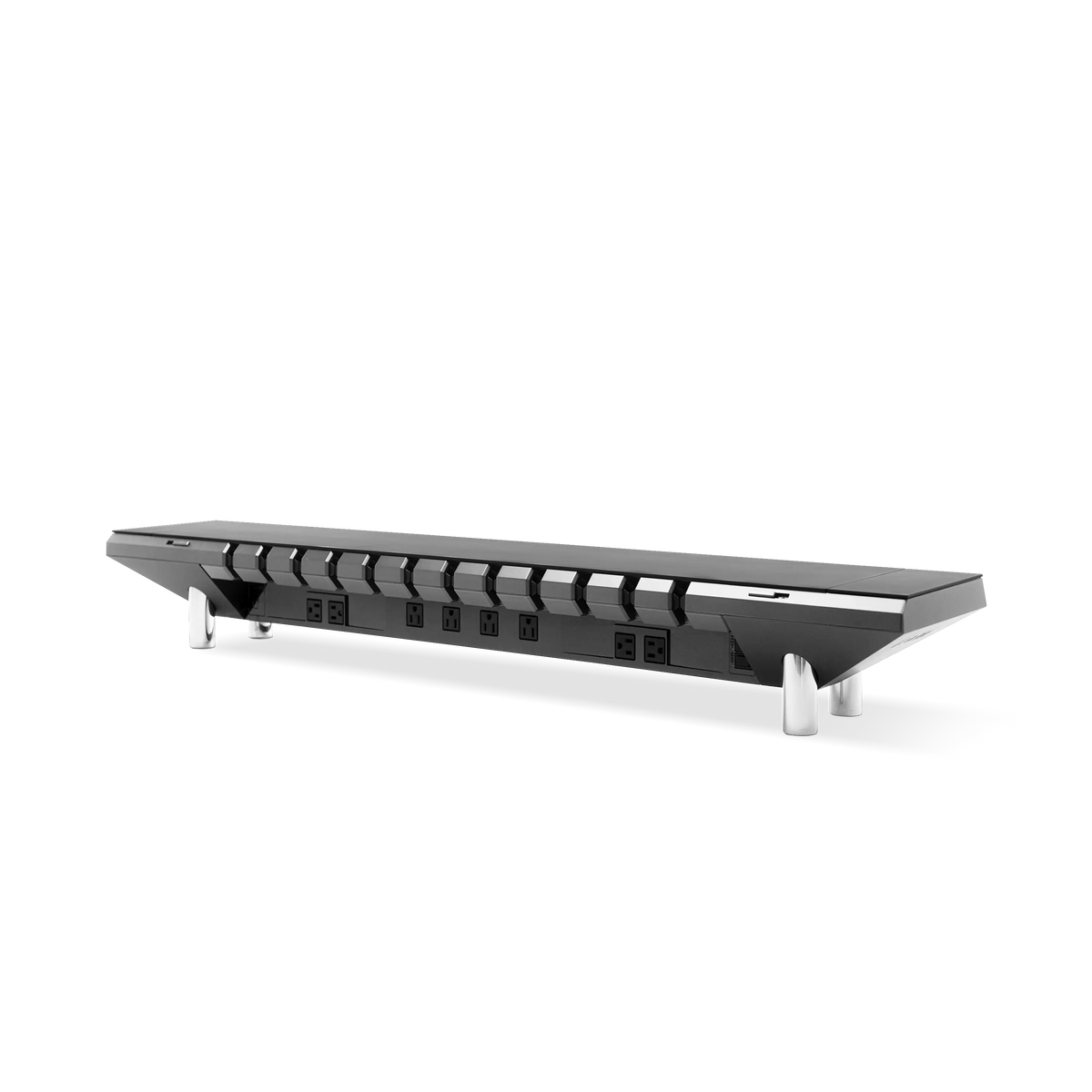
Die einzige wirkliche Schwachstelle ist Feuchtigkeit. Technische Kerne sind extrem anfällig für Wasserschäden, wo immer der Kern freiliegt, eine unversiegelte Kante oder, klassischerweise, eine offene Kabeldurchführung, wo ein versehentliches Verschütten die Platte aufquellen und zerstören kann. Die Lösung ist einfach: Vergewissern Sie sich, dass die Kanten und alle Ausschnitte vollständig versiegelt sind, und führen Sie Strom und Kabel durch eine verwaltete Oberfläche wie das Hexcal Studio statt durch ein freiliegendes Loch im Kern.
Laminat und HPL: Das Arbeitspferd im Büro
Hochdrucklaminat ist das, woraus die meisten Büromöbeloberflächen tatsächlich bestehen. HPL verbindet eine Melaminschicht mit der Ober- und Unterseite einer MDF-Platte; wenn Hitze den Klebstoff verschmilzt, spricht man von Thermally Fused Laminate. Das Ergebnis ist eine Schreibtischplatte, die sich bei Temperatur nicht wie Naturholz zusammenzieht oder ausdehnt, Kratzern und Flecken besser widersteht als eine geölte Holzoberfläche und weit weniger kostet als Massivholz. Für ein viel frequentiertes Homeoffice, in dem Haltbarkeit wichtiger ist als Maserungsauthentizität, ist eine hochwertige HPL-Oberfläche die pragmatische Wahl.
Die Variabilität verbirgt sich im Substrat. Zwei HPL-Schreibtischplatten, die in einer Website-Beschreibung identisch wirken, können sich stark unterscheiden, je nach der Güte des darunter liegenden MDFs und des daran gebundenen Laminats. Ein Premium-Laminat über einem dichten, zertifizierten Kern hält länger als ein Budget-Laminat über einem lockeren Spanplattenkern, und nur das Zertifizierungsetikett sagt Ihnen, welches Sie bekommen.

Das Emissionslabel lesen (Das ist die entscheidende Zahl)
Die Emissionszertifizierung ist die wichtigste Spezifikation einer Schreibtischplatte, und doch übersehen Käufer sie oft. In den Vereinigten Staaten begrenzt der EPA TSCA Title VI Standard den Formaldehydgehalt für Verbundholz je nach Plattenart auf bis zu 0,05 ppm, wobei Hartholzsperrholz auf 0,05 ppm, Spanplatten auf 0,09 ppm und MDF auf 0,11 ppm begrenzt sind, was Kaliforniens CARB Phase 2 widerspiegelt. In Europa definiert der EN 717-1 Kammer-Test E1 mit nicht mehr als 0,124 mg/m³ (ungefähr 0,1 ppm), während die strengere E0-Klasse etwa 0,05 ppm anstrebt. Wenn Sie eine Holzschreibtischplatte vergleichen, suchen Sie den Standardcode, TSCA Title VI, CARB Phase 2, E1 oder E0, ordnen Sie ihn dem Plattentyp zu und behandeln Sie ein fehlendes Etikett als Warnsignal, nicht als neutral.
Dicke, Größe und die Spezifikationen, die das Durchbiegen bestimmen
Die Abmessungen einer Schreibtischplatte sind nicht nur entscheidend für die Bewegungsfreiheit. Die Dicke bestimmt, wie stark die Oberfläche unter einem Monitorarm nachgibt, der am hinteren Rand befestigt ist: Eine 25 mm starke Platte ist das praktische Minimum für eine breite Stehfläche, und dünnere Platten biegen sich unter Belastung an den Ecken sichtbar durch. Die Oberflächengröße muss an den Rahmen und den Benutzer angepasst werden, und die Stellfläche bestimmt auch die Form, da ein Eckarbeitsplatz, der um einen L-förmigen Stehpult herum gebaut ist, mehr vom Kern verlangt als eine gerade Platte. Die Kombination einer großzügigen Schreibtischplatte mit einem Rahmen, der einen Verstellbereich von 620-1270 mm bietet, hält die gesamte Einrichtung innerhalb des ISO 9241-5:2024 Bereichs für sitzende und stehende Körperhaltung, und wie man Rahmenbeine, Motoren und Belastungsangaben liest ist genauso wichtig wie die Oberfläche selbst, während eine schöne Platte auf einem Rahmen, der zu hoch ist, kleinere Benutzer unbequem sitzen lässt. Kantenversiegelung und Eckenradius runden die Spezifikationsliste ab; scharfe, unversiegelte Kanten sind sowohl ein Komfort- als auch ein Feuchtigkeitsrisiko. Vervollständigen Sie das Bild mit einem Hexcal Inspire Chair, damit die durch die Oberfläche ermöglichte Sitzhöhe auch tatsächlich nutzbar ist.

Vergleich der Materialien für Schreibtischplatten
| Material | Emissionsbilanz | Feuchtigkeit / Verzug | Am besten geeignet für |
|---|---|---|---|
| Massivholz | Gering, abhängig von den VOCs der Oberflächenbehandlung | Kann sich wölben/reißen; braucht Pflege | Käufer, die nachölen und neu lackieren werden |
| Technisches Holz (MDF/Spanplatte) | Gering, wenn nach TSCA Title VI / CARB Phase 2 für den Plattentyp zertifiziert | Stabil; anfällig bei freiliegendem Kern | Verzugsfreie Stabilität, integrierte Rahmen |
| HPL / TFL Laminat | Abhängig von der MDF-Kernzertifizierung | Sehr stabil; kratz-/fleckenresistent | Hohe Beanspruchung, Haltbarkeit vor Maserung |
Die beste Schreibtischplatte ist die, deren Kern, Oberfläche und Zertifizierung Sie tatsächlich überprüft haben, nicht die mit der schönsten Maserung im Vorschaubild. Wenn Sie einen natürlichen Charakter wünschen und diesen pflegen werden, belohnt eine zertifizierte Massivholzoberfläche mit einer VOC-armen Beschichtung den Aufwand. Wenn Sie eine Oberfläche wünschen, die sich nie verzieht, sauber montiert werden kann und Teil eines kompletten Sitz-Steh-Systems ist, ist eine zertifizierte technische Platte, wie die Spanplatte des Hexcal Elevate Stehpults, kombiniert mit einem Hexcal Studio, um Kabel vom Kern fernzuhalten, die risikoärmere Langzeitlösung. Eine ehrliche Einschränkung: Da wir komplette Schreibtische statt bloßer Tischplatten verkaufen, sollten Sie sich an einen spezialisierten Oberflächenanbieter wenden, wenn Sie nur eine Ersatzplatte für einen vorhandenen Rahmen benötigen. Lesen Sie das Etikett, prüfen Sie die Dicke und kaufen Sie die Schreibtischplatte, der Sie auch in zehn Jahren noch vertrauen werden.
Vom Hexcal Team.